

Polyamide ropes
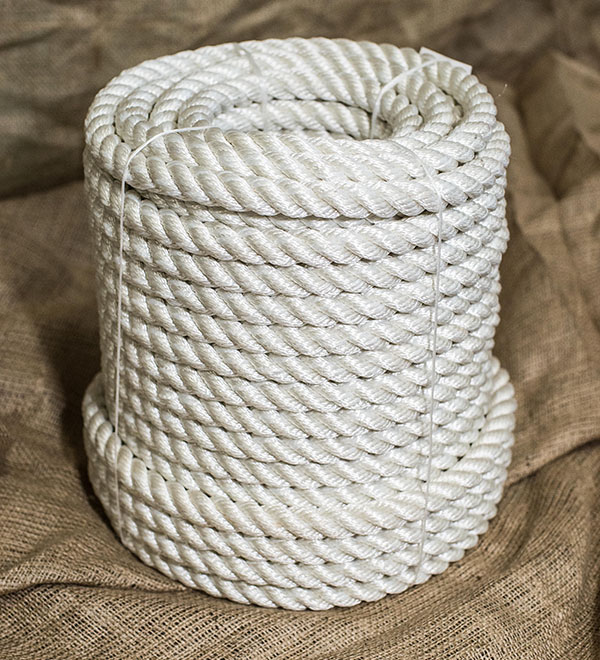
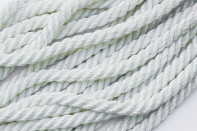
Polyamide ropes are commonly used in shipping, fishing and construction.
The raw material for the production of these ropes is light-stabilized polyamide (polyamide fiber with a density of 1.14 g/cm3), known in the world under the following names: kapron (Russia), nylon (USA), perlon and dederon (Germany), amylan and niplon (Japan), silon (Czech Republic), stylon (Poland), etc. The maximum operating temperature is from 80 to 140В°C.
Polyamide ropes are elastic, well elastic, withstand strong jerks, are not affected by organic acids, oil, are not subject to rotting and mold, and at temperatures below 0В°C they retain their former elasticity.
When used in dry condition, due to the ability to form a protective layer of pile on the surface, polyamide (kapron) ropes are the most wear-resistant of all types of ropes made of synthetic materials. In wet condition, this ability decreases. Polyamide (kapron) ropes are characterized by a relatively low coefficient of friction (steel 0.11...0.17), which for a rope in a wet state increases by 40...80%. Polyamide (kapron) ropes are characterized by the stability of the coefficient of friction at a given load in a dry or wet state of the rope. The first 2-3 hours of operation, the polyamide (kapron) rope has zero buoyancy, i.e. it stays close to the water surface. It should be taken into account that when polyamide (kapron) ropes get wet, the breaking load decreases by approximately 20%, the nominal linear density increases by 5% due to moisture absorption. At a temperature of 140 В°C, strength is lost, and after 215 В°C they melt.
The disadvantage of polyamide ropes is increased electrification, instability to the action of concentrated acids and organic solvents, as well as the ability to stretch under load (elongation under load 20-25%).
Application:
Equipment for sea and river fleets - mooring ropes, running and standing rigging, lifting mechanisms.
In industrial fishing - manufacture and repair of fishing trawls.
IMPORTANT TO REMEMBER: The safety margin for ropes made of synthetic fibers should be sixfold. In other words, it is necessary to limit the working load of the twisted product to 15-17% of the breaking load. The maximum permissible load should be no more than 2/3 of the breaking load. Compliance with this requirement will dramatically reduce the risk in your work and significantly increase the service life of the ropes.
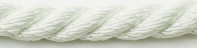
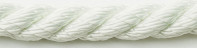
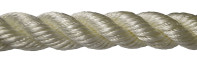
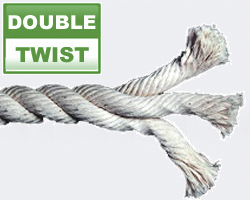 All our ropes are manufactured using the"Double Twist" technology.
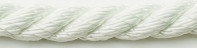
The "Double Twist" technology means that during manufacture, each of the three strands that make up the rope is twisted from thin three-strand ropes (cables), which, in turn, are twisted from thinner threads. That is, the rope consists of strands, and each strand from thinner threads. With conventional "rope" technology, the threads in the strand are not twisted, but folded. Double Twist technology increases the strength of the rope, increases wear resistance, and improves its appearance.
| Artikul | Diameter | Breaking stress | Weight 1 m | Length | Price | Pack pcs. | |
|---|---|---|---|---|---|---|---|
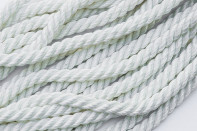
|
No.98 |
8
mm
|
1200 kg | - | 1 m |
22.20 uah
|
|
|
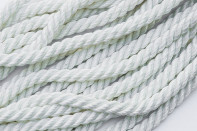
No.99 |
10
mm
|
1750 kg | - | 1 m |
33.35 uah
|
|
|
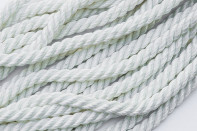
№268 |
12
mm
|
2200 kg | - | 1 m |
43.70 uah
|
|
|
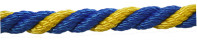
№644 |
13
mm
|
- | - | 1 m |
60.95 uah
|
|
|
№319 |
14
mm
|
2620 kg | - | 1 m |
59.80 uah
|
|
|
№349 |
16
mm
|
4400 kg | - | 1 m |
71.30 uah
|
|
|
№351 |
20
mm
|
7000 kg | - | 1 m |
95.97 uah
|
|
|
№528 |
40
mm
|
24000 kg | - | 1 m |
359.95 uah
|
|
|
No.47001 |
47
mm
|
- | - | 1 m |
420.00 uah
|
|
 |  |  |  |  | |
| high strength | not afraid of UF radiation | not afraid of water | resistant to chemicals | wear-resistant rope | "Double Twist" |
 |  |  |  |  |
| for marine use | for mooring | for lifting loads | for hunting and fishing | for household needs |

